Pages

Showing posts with label Beau Geste. Show all posts

Sunday, 28 September 2014

Beau Geste Digest

All the latest from our friends over in Argentina

Hi to everyone,

Just a short note from the Chicago show. We have room trade full day tomorrow and show on Sunday. Here are the sets I brought here that are being released during these wonderful days. I didn't want to keep you waiting until I'm back home to see the pictures. Hope you like them. Enjoy.

Delhi Durbar 1903

397 - Elephant with Akali from Patiala, Delhi Durbar 1903


398 - Elephant with Drummer from Patiala, Delhi Durbar, 1903


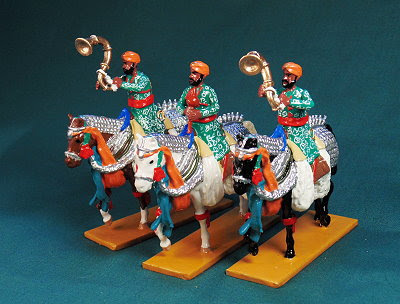
393 - Rewah Cavalry, Delhi Durbar, 1903


394 - Rewah Musicians, Horns and Flute, Delhi Durbar, 1903


395 - Rewah Musicians, Serpentines and Cymbal, Delhi Durbar, 1903


396 - Flagbearers from Sehr and Mukalla, Delhi Durbar, 1903


World War I
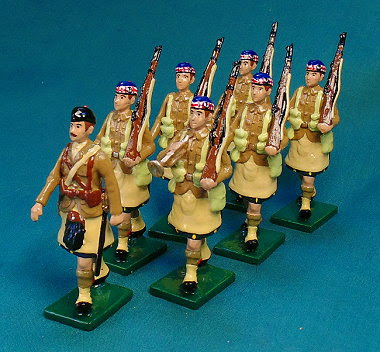
391A - Scottish Infantry, with beret, WWI


392A - Scottish Fifers and Drummers, with beret, WWI


391B - Scottish Infantry, with hat, WWI


392B - Scottish Fifers and Drummers, with hat, WWI


391C - Scottish Infantry, with helmet, WWI


392C - Scottish Fifers and Drummers, with helmet, WWI


 Happy Hunting!


Friday, 25 July 2014

Beau Geste Digest

The latest releases from Ana and the team over in Argentina, two groups of photographers for their flagship Delhi Durbar range, together with some of the original photographs that inspired their creations


Happy Hunting!

Tuesday, 3 June 2014

Beau Geste Digest: New DD Releases

A message from Ana to introduce the latest releases for her flagship Delhi Durbar range. You might also be interested in visiting the DD history page that Ana has set up telling you a little of the fascinating background to the celebrations


Hello

Here is the rest of the Delhi Durbar Spectators. One more set of Occidental spectators and three sets of Local ones. They are all different, a combination of bodies, heads, arms and colors. I loved painting them, I hope you like them too

The Occidentals


Three sets of Locals

All together now!


Three of the original images that inspired Ana's creations


Happy Hunting!

Sunday, 16 March 2014

Beau Geste Digest: New DD Releases

Following hot on the heels of the latest WW1 releases from BG are these tremendous new elephants and spectators for their flagship range of figures celebrating the magnificent Delhi Durbar of 1903

There are four elephants in all, each representing the mounts ridden by various ADCs at the head of the procession

378-379-380-381 - Elephants of the Aides-de-camps, in front of the Main Procession, Delhi Durbar, 1903

378 - Elephant of the Aides-de-camps of the Viceroy, Capt. Baker-Karr - Capt. Wigram, Delhi Durbar, 1903


382 - Occidental Ladies Spectators, Delhi Durbar 1903


383 - Occidental Ladies Spectators, Delhi Durbar 1903


384 - Occidental Gentlemen Spectators, Delhi Durbar 1903

"I have more spectators on the make, almost ready, but I didn't want to hold the releases any longer. There will be one more set of occidental gentlemen, three sets of local spectators, and one box with photographers. I will be updating the elephants pages when they are all ready, and will send the usual brief background then. But in the meantime, here are the images that inspired the four elephants of the main procession."


"There were six elephants in total, with the Aides-de-camps, before the elephants of the Viceroy and the Duke, in front of both columns of the Main Procession. I will make the other two within the next two years. Their howdahs were quite different from the other four and, mainly, I didn't want to release six elephants at once :) Here is a photo showing the six of them."


Happy hunting!

Sunday, 2 March 2014

Beau Geste Digest: New WW1 Release

New from BG, a lovely set of British Camel Corps figures representing Imperial troops stationed in Egypt in 1916


A brief background. The Imperial Camel Corps Brigade (ICCB) was a camel-mounted infantry brigade that the British Empire raised in December 1916 during the First World War for service in the Middle East.

From a small beginning the brigade eventually grew to four battalions, one battalion each from Great Britain and New Zealand and two battalions from Australia. Support troops included a mountain artillery battery, a machine gun squadron, Royal Engineers, a field ambulance, and an administrative train.


The ICC became part of the Egyptian Expeditionary Force (EEF) and fought in several battles and engagements, in the Senussi Campaign, the Sinai and Palestine Campaign and in the Arab Revolt. The brigade suffered 246 men killed. The ICC was disbanded after the end of the war in May 1919.

The advantages of camels in a desert environment are well known, and the British Army had raised the Somaliland Camel Corps in 1912. However the British Army forces serving in Egypt at the start of the First World War did not possess their own camel formation.

 
The first units of what became the Imperial Camel Corps were four company-sized formations that conducted long-range patrols around the Suez Canal and the Sinai Desert. The companies were raised in Egypt in January 1916, from Australians returning from the failed Gallipoli Campaign.

The Indian princely state of Bikaner supplied the first camels as the Bikaner Camel Corps already used camels. These camels were later only used as draught animals and the lighter Egyptian camel became the mount chosen for carrying troops. The camels could cover an average distance of 3 miles (4.8 km) an hour, or 6 miles (9.7 km) an hour trotting, while carrying a soldier, his equipment and supplies.

 
The camel companies consisted of a small headquarters and four sections, each of seven groups of four men.

The four companies were expected to operate as independent units that travelled by camel but then dismounted to fight as infantrymen. Following the practice of cavalry and mounted infantry units, one man of each group of four held the camels when the team was in action, which reduced a team's firepower by a quarter.

However it was soon discovered that camels were not as nervous as horses when faced with artillery and rifle fire, and one man would look after twelve to sixteen camels once the troopers had dismounted.


 Happy hunting!

Wednesday, 25 December 2013

Beau Geste Digest: December Releases

New releases in December from our Argentinian cousins take the form of three new sets for their WW1 range

Sets 374, 375 and 376 depict WW1 British Infantry and a British Field Medical Corps Mule Ambulance, all in winter uniform

374 - British Infantry in campaign,
Winter, WWI


376 - British Military Band,
Winter, WWI

375 - British Field Medical Corps,
Mule Ambulance, Winter, WWI


Happy hunting!